Every Picture Is a Compromise
Lessons from the Also-rans
Most photography websites show the photographer's very best work. Wonderful. But that's not the full story of a creative life. If we want to learn, we'd better pay attention to the images that aren't "greatest hits" and see what lessons they have to offer. Every picture is a compromise — the sum of its parts, optical, technical, visual, emotional, and even cosmic – well, maybe not cosmic, but sometimes spiritual. Success on all fronts is rare. It's ok to learn from those that are not our best.
This is a series about my also-rans, some of which I've been able to improve at bit (i.e., "best effort"), none of which I would consider my best. With each there are lessons worth sharing, so I will.
|
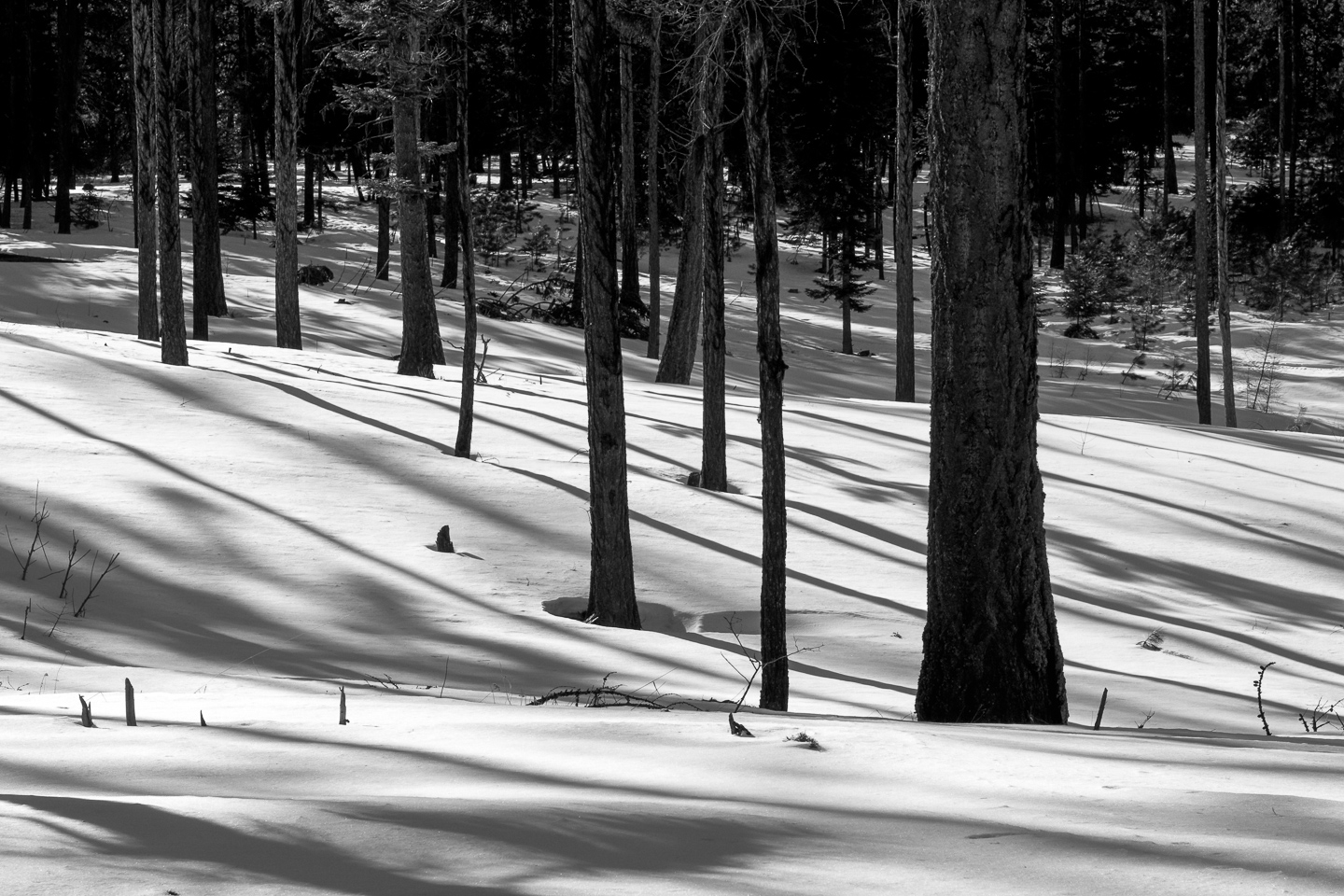
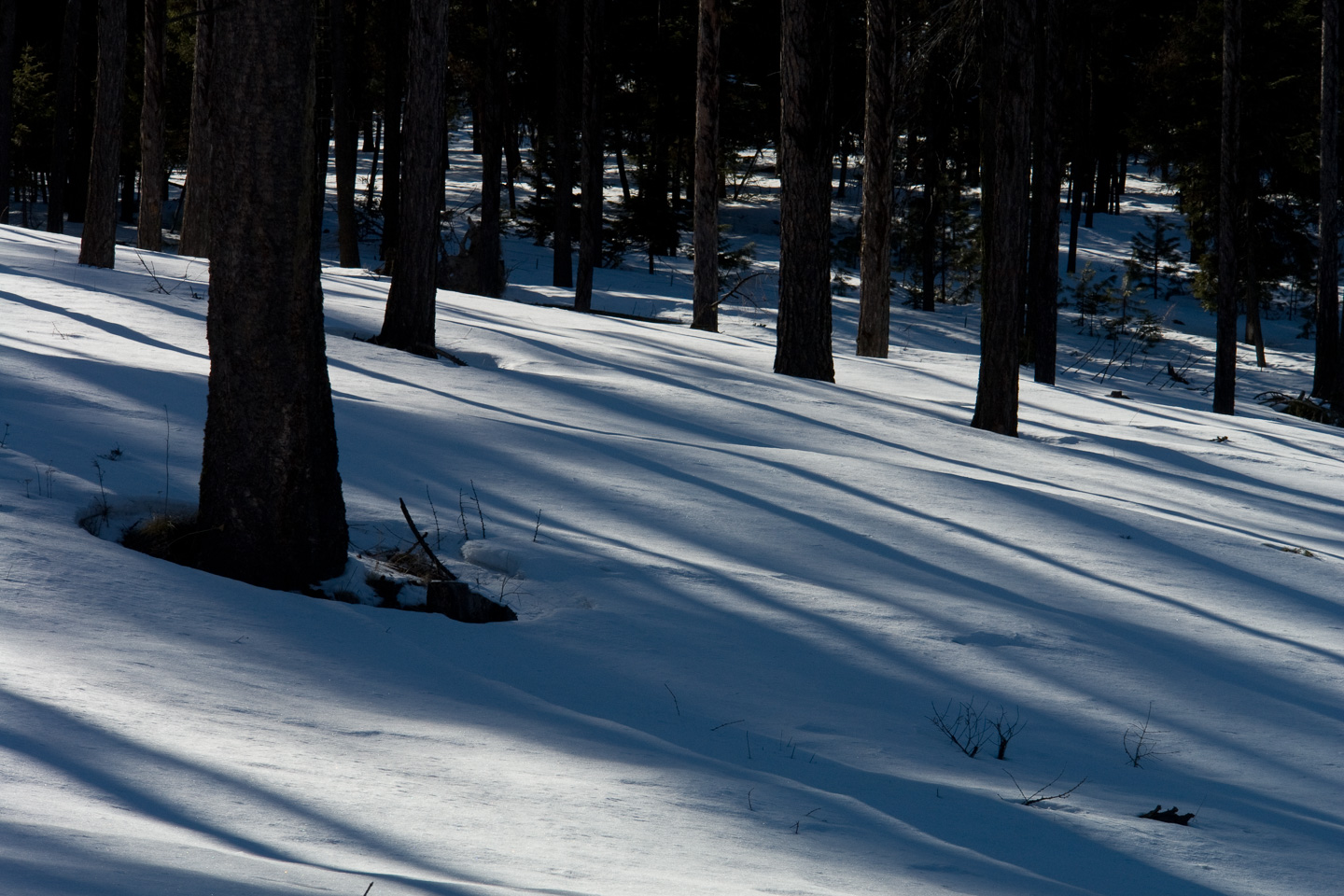
Original digital capture
What I saw that I liked:Yet another snow scene. Just love them, especially when there is some sunlight to make the snow glisten. I like the diagonals of the shadows that contrast with the vertical tree trunks. What I don't like in the picture:The blue in the above is the natural color rendition. It's the color the white snow takes on when it is in shadow and reflecting the blue in the sky. What I learned:This image from 2008 was one of the earliest examples of when I converted a color RAW capture to a b/w. My early renditions of this capture had totally black tree trunks. I wasn't thrilled with the lack of detail in the bark, so I lifted the shadows. This was the image that convinced me that there is a lot more to pull out of the deep shadows than I ever knew possible based on my film experiences. Digital capture just seems to have lots of hidden detail that can be coaxed into visibility. 2nd Chances: What I might try nextI used a different variation of this location in my Winter Trees II PDF. In retrospect, I should have used this one. |