Every Picture Is a Compromise
Lessons from the Also-rans
Most photography websites show the photographer's very best work. Wonderful. But that's not the full story of a creative life. If we want to learn, we'd better pay attention to the images that aren't "greatest hits" and see what lessons they have to offer. Every picture is a compromise — the sum of its parts, optical, technical, visual, emotional, and even cosmic – well, maybe not cosmic, but sometimes spiritual. Success on all fronts is rare. It's ok to learn from those that are not our best.
This is a series about my also-rans, some of which I've been able to improve at bit (i.e., "best effort"), none of which I would consider my best. With each there are lessons worth sharing, so I will.
|
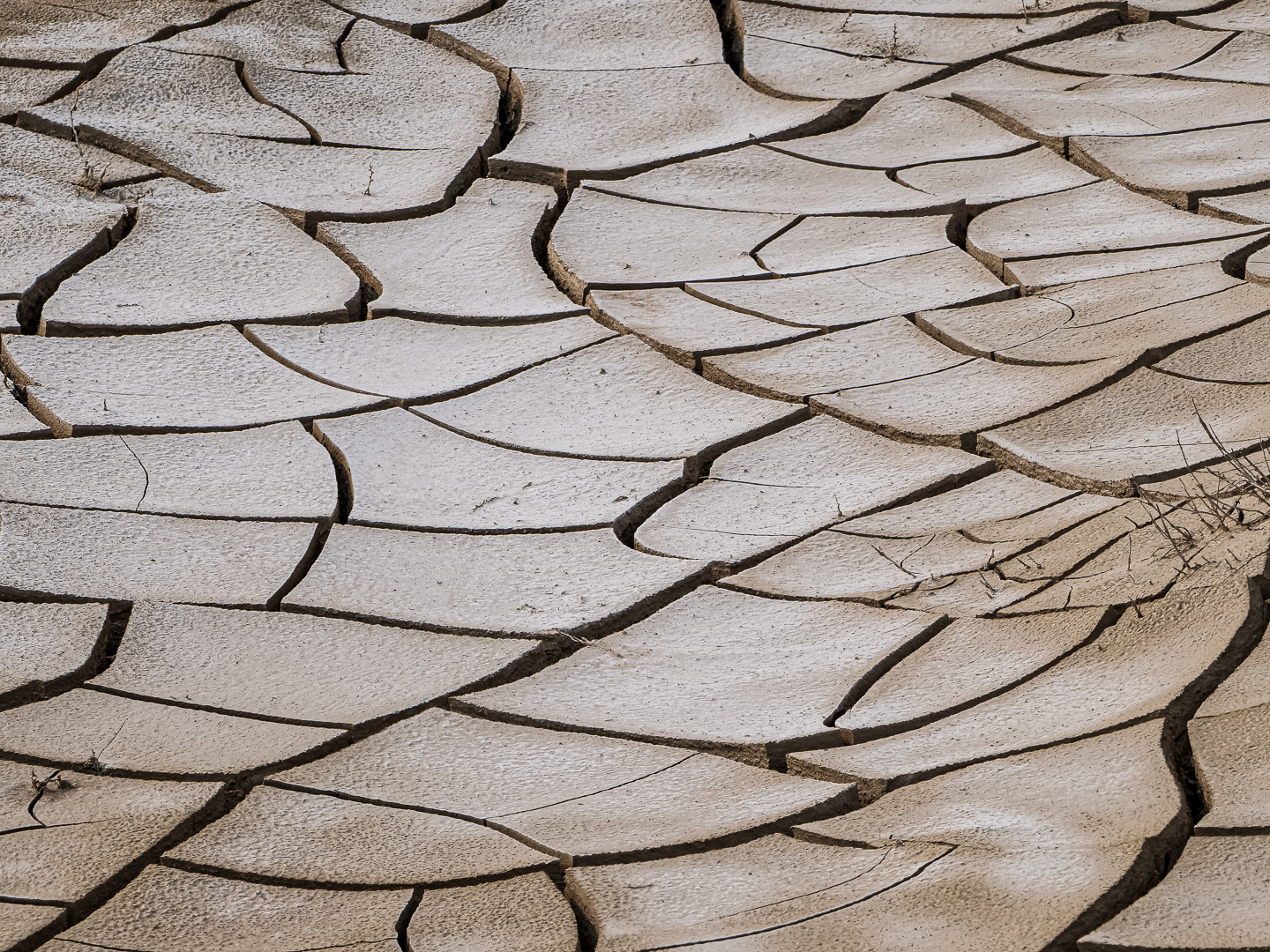
Original digital capture
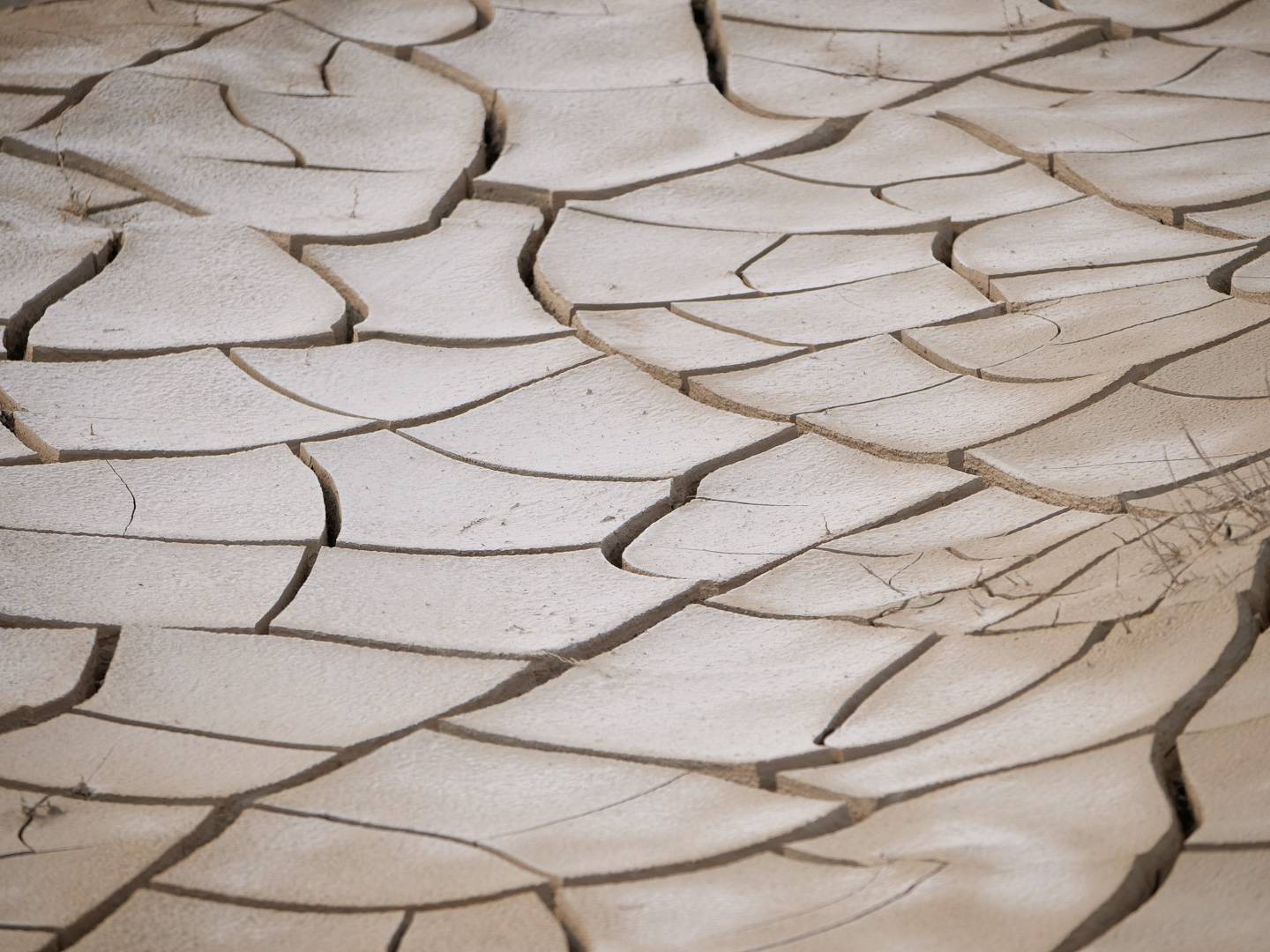
What I saw that I liked:I continue to struggle with mud cracks, but I'm so drawn to them as abstracts that I'll keep working on them. What I don't like in the picture:The version above was shot at f/3.5. I knew the instant I pressed the shutter that this was going to be too shallow of a depth of field to keep the top and bottom in focus. What I learned:We've all had drummed into us that super small apertures will introduce a sharpness-softening effect known as diffraction. True, the math and the optics verify this. But the version at left was shot at f/14 (an eq. of f/28 on a full frame camera). According to the "experts," this should be soft. What do you think? Click on the image at left to see it larger. In particular, compare those few blades of grass in the right-center. I'll take every time the sharpness (with diffraction) of the image at left over the obvious shallow depth of field in the above. 2nd Chances: What I might try nextLove the subtle colors in this one. Might want to try pulling up the saturation in the blue and cool tones just to increase the sense of three-dimmensions. |