Every Picture Is a Compromise
Lessons from the Also-rans
Most photography websites show the photographer's very best work. Wonderful. But that's not the full story of a creative life. If we want to learn, we'd better pay attention to the images that aren't "greatest hits" and see what lessons they have to offer. Every picture is a compromise — the sum of its parts, optical, technical, visual, emotional, and even cosmic – well, maybe not cosmic, but sometimes spiritual. Success on all fronts is rare. It's ok to learn from those that are not our best.
This is a series about my also-rans, some of which I've been able to improve at bit (i.e., "best effort"), none of which I would consider my best. With each there are lessons worth sharing, so I will.
Previous image | Next image |
Original digital capture
First Days with an Early Digital Camera
This week I'm looking at five images from my very first days with a digital camera. These come from a day in 1998 at the Sun Yat Sen Chinese garden in Vancouver, BC. So much to learn! That said, I'm amazed what I can pull out of this early 6 megapixel Fuji S602 with its tiny sensor by using today's software that has had 30 years of development. I talked about this in one of my Here's a Thought… commentaries here.
What I saw that I liked:
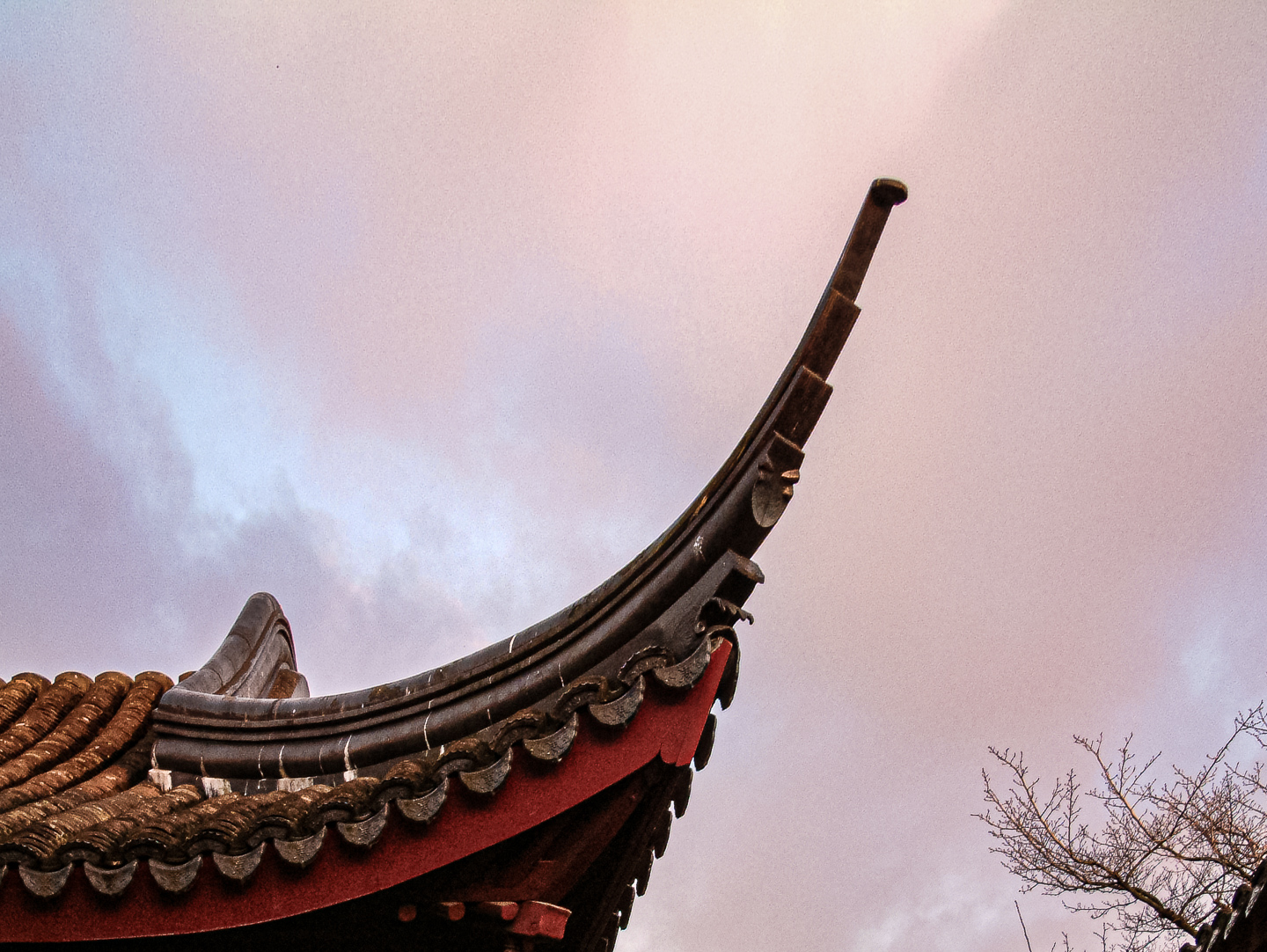
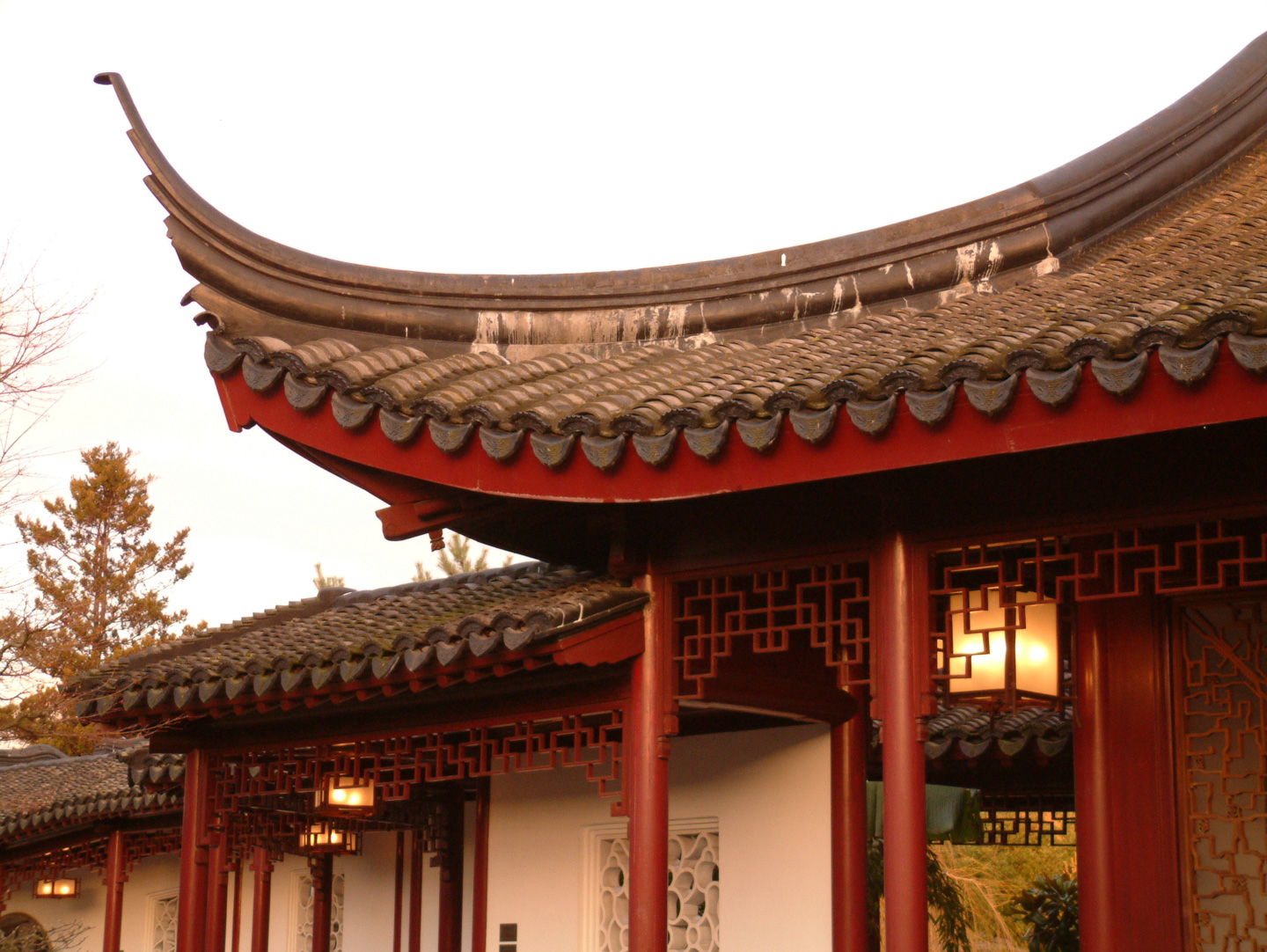
It's all about the curve in the roof line.
What I don't like in the picture:
I suppose I could spend an hour or so trying to eliminate all the white bird poop from the roof. Or not.
What I learned:
With the simplified composition at left, the feeling of the curved roof is more commanding than the version above. I don't need all the lights, support beams, and walls in the above to show the curve of the roof. The one at left is much stronger.
2nd Chances: What I might try next
This is another image where I need to think about those colorful skies. Should I desaturate the color out of the sky? Perhaps worth a look. |
|