Every Picture Is a Compromise
Lessons from the Also-rans
Most photography websites show the photographer's very best work. Wonderful. But that's not the full story of a creative life. If we want to learn, we'd better pay attention to the images that aren't "greatest hits" and see what lessons they have to offer. Every picture is a compromise — the sum of its parts, optical, technical, visual, emotional, and even cosmic – well, maybe not cosmic, but sometimes spiritual. Success on all fronts is rare. It's ok to learn from those that are not our best.
This is a series about my also-rans, some of which I've been able to improve at bit (i.e., "best effort"), none of which I would consider my best. With each there are lessons worth sharing, so I will.
Previous image | Next image |
Original digital capture
Things vs Moments
Photographs can be of things or of moments. Over my five decades as a photographer, I've capture tens of thousands of things, but all of my better images have been of moments. This week I'll try to illustrate this with a few examples.
What I saw that I liked:
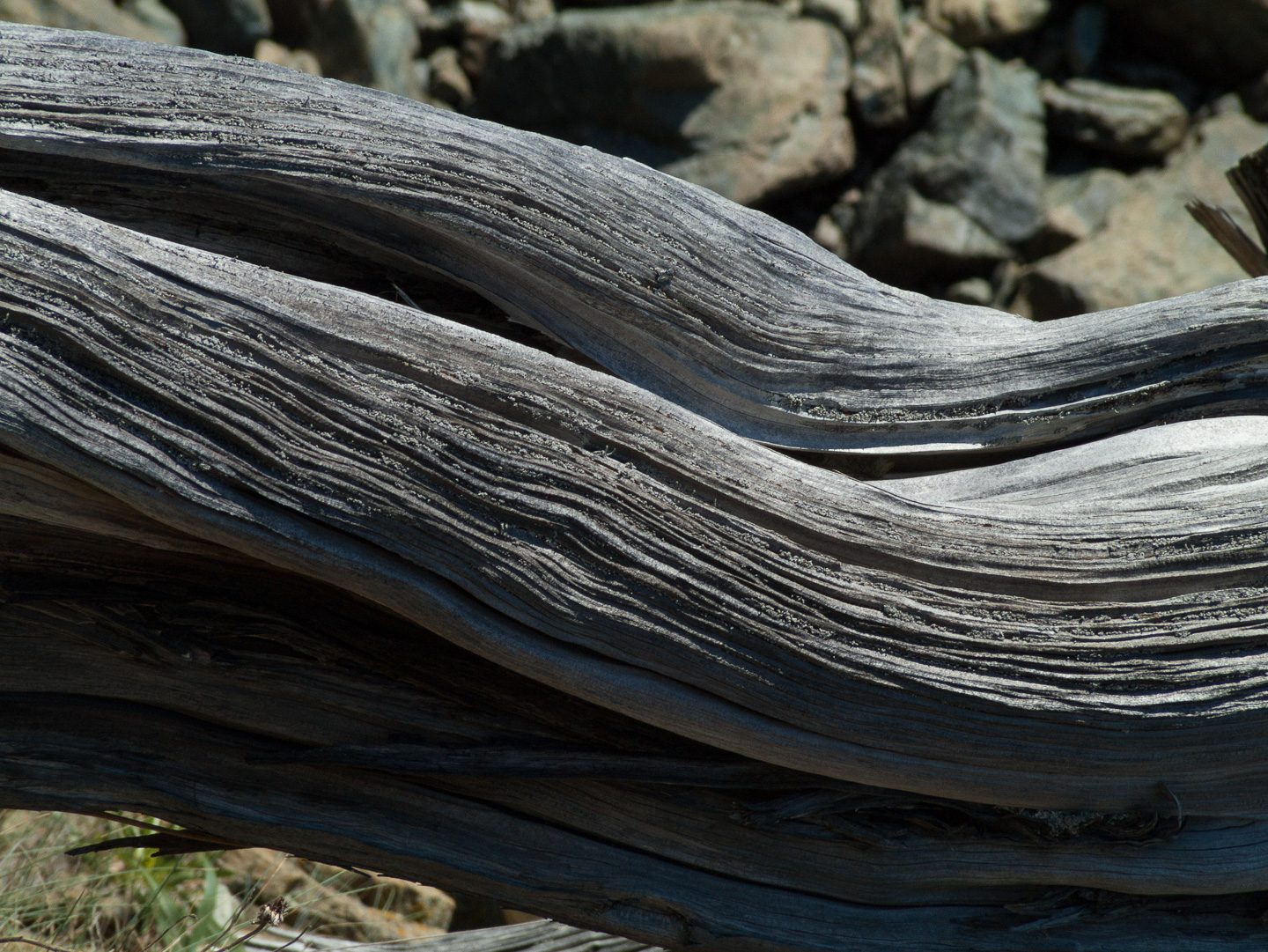
It's important to be careful what we set out to photograph. The image above came from a morning when I was specifically photographing driftwood for an imagined project.
What I don't like in the picture:
I think you'll agree that the above image is pretty awful, but it did fit the criteria of the morning's objective — to photograph driftwood. Having succeeded at that, however, it failed as a photographic image. I must have intuitively known this.
What I learned:
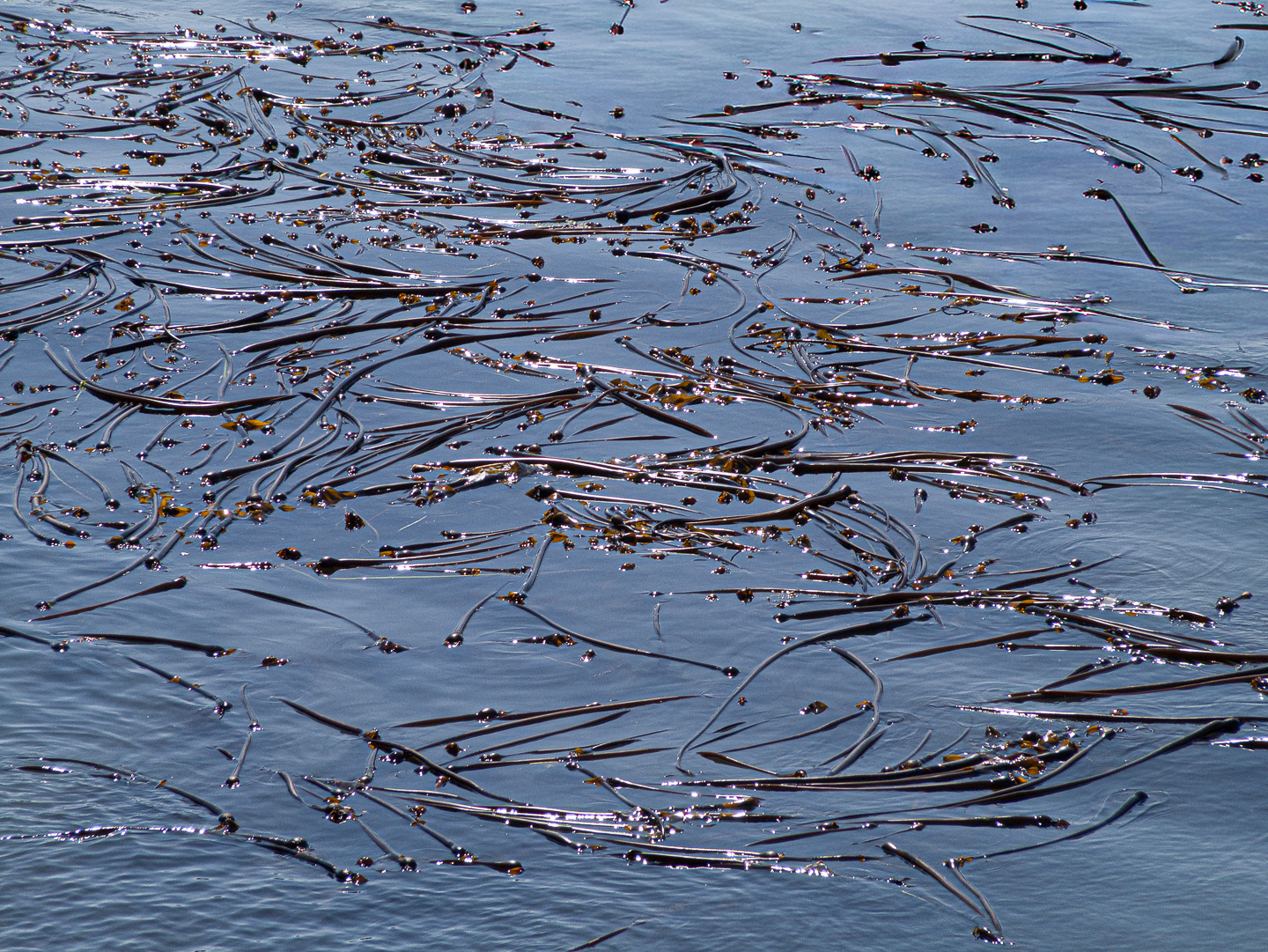
After photographing the driftwood above, I knew that the driftwood project was going nowhere . I instinctively glanced to my left and saw this kelp bed and the deep blue water reflecting the blue sky above. I gave up my driftwood objectives and spent the morning dancing with seaweed — enough to make its own project. Sometimes it's best to immerse ourselves in the moment that's presented to us and photograph it rather than to impose our will on an uncooperative landscape. I can't remember now who said that photographers don't make pictures but rather that subjects allow themselves to be photographed. I like that notion. |
|